 Scan to connect with Support Desk
§ 1. The Square Cross-Section and Resistance to Torsional Buckling
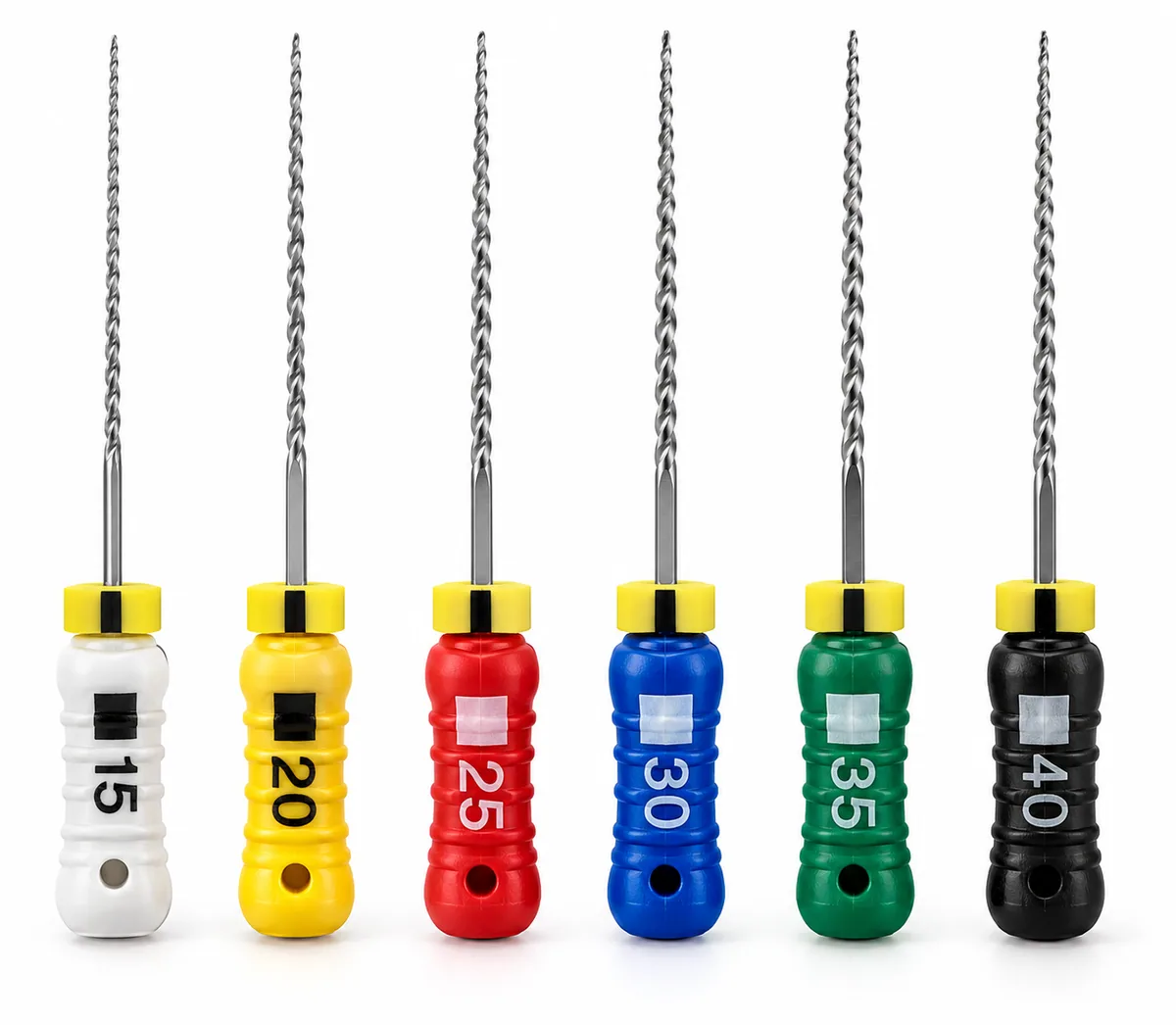
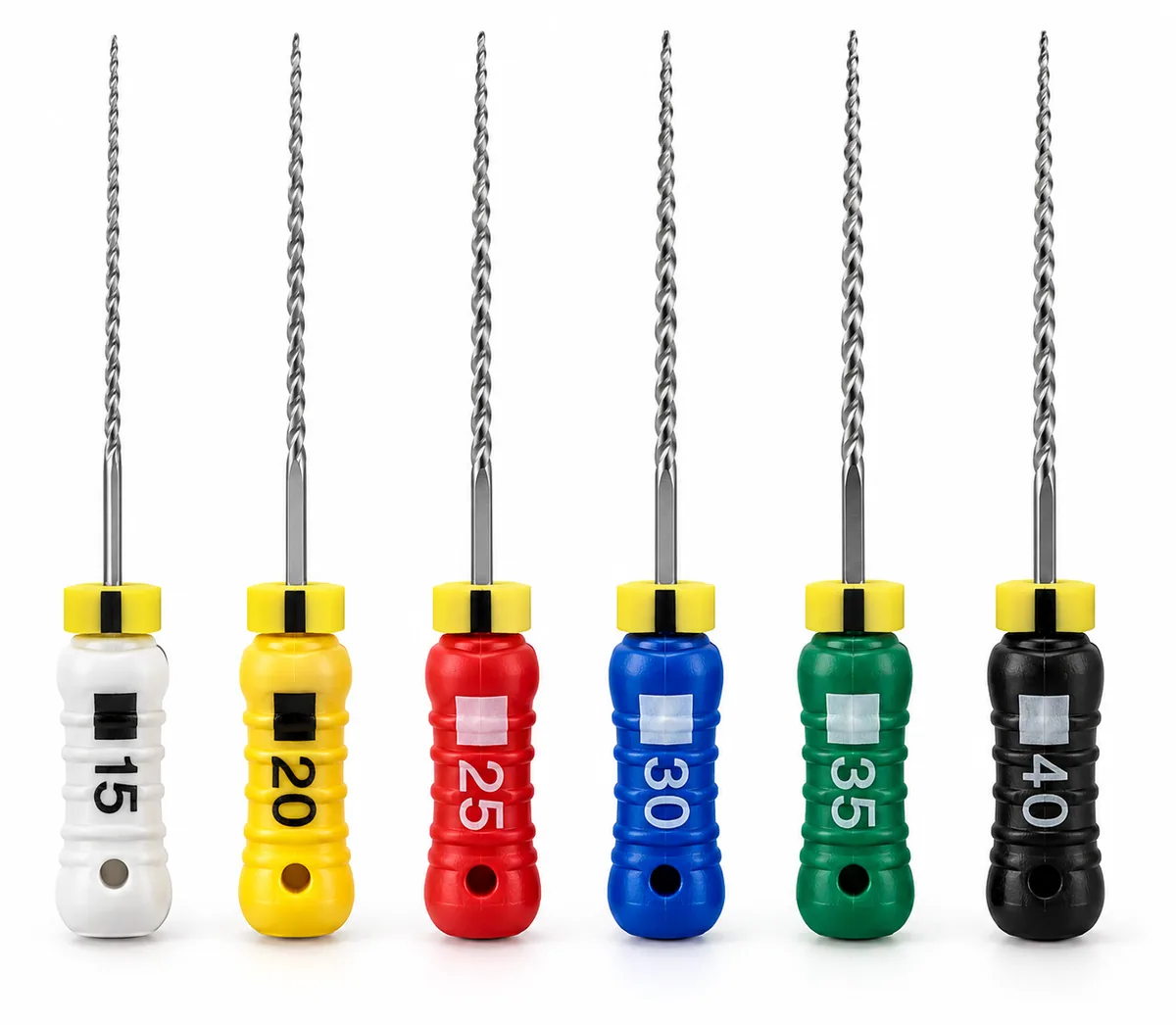
Entering a tight, calcified canal requires an instrument with column strength that resists buckling. The square blank twisted into a K-file provides high mass and torsional rigidity, allowing apical negotiation through tight anatomical restrictions.
§ 2. The Balanced-Force (Roane) Kinematic Technique
Watch-winding and the Balanced Force technique (60° clockwise rotation to engage dentin, followed by 120° counter-clockwise rotation with inward pressure to shear chips) allow K-files to enlarge curved canals while maintaining original canal centering.
§ 3. Inspection Protocols to Prevent File Separation
Stainless steel files rarely separate without prior deformation: flutes uncoil or wind tighter before fracture occurs. Routine visual inspection of flutes allows clinicians to retire stressed instruments before breakage.