 Scan to connect with Support Desk
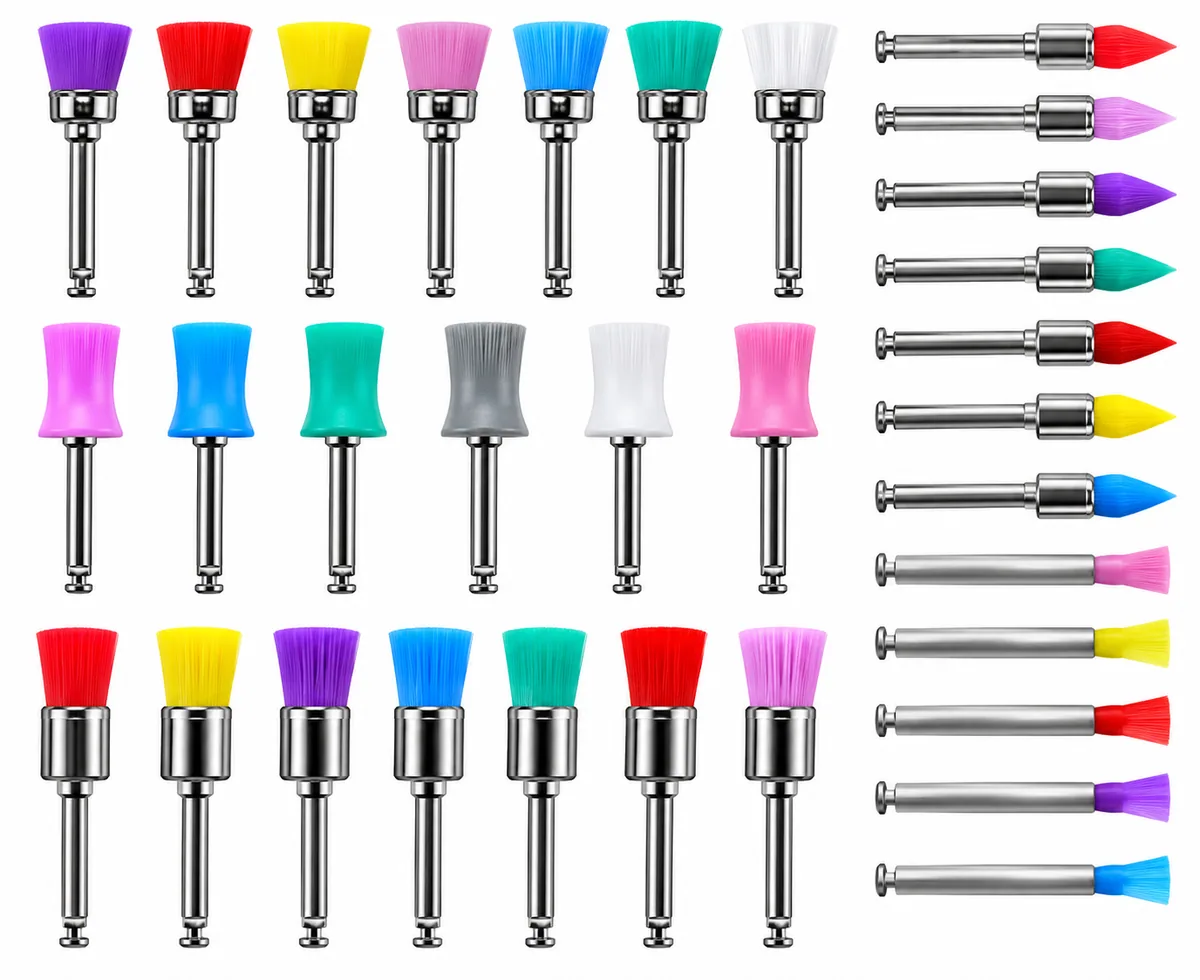
§ 1. Mandrel Geometry & Rotational Concentricity
The RA (Latch-Type) mandrel standard requires strict radial runout tolerances (<0.02 mm) to prevent micro-vibrations inside the contra-angle gear head. High concentricity guarantees stable contact with enamel margins, reduces operator wrist fatigue, and prevents erratic chatter that can irritate marginal gingiva during subgingival plaque debridement.
§ 2. Bristle Stiffness vs Flexible Cup Paste Retention
Pointed bristle tips excel in fossae and orthodontic brackets where mechanical sweeping lifts stubborn extrinsic tobacco and tea stains. Conversely, webbed rubber cups produce a hydrostatic seal that keeps prophy paste centered on the tooth surface, allowing fine abrasive particles to polish micro-scratches without splattering into the patient's airway or oral mucosa.
§ 3. Speed Regulation and Pulp Thermogenesis Prevention
Operating prophylaxis brushes above 5,000 RPM causes friction-induced heat spikes exceeding the critical 5.5°C intrapulpal threshold. Hygienists should apply intermittent, feather-light pressure at 1,500–2,500 RPM with continuous paste lubrication to ensure pristine enamel luster while protecting pulp vitality.